

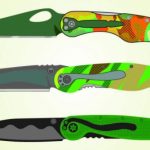
A reliable push button knife opens consistently, locks securely, and holds up to daily carry demands without mechanical failure. For everyday carry users across the United States, the right choice comes down to build quality, blade steel, and whether the knife is legal to own and carry in a given state.
Push button knives, more commonly known as automatic or switchblade knives, rely on an internal spring mechanism to deploy the blade when a button is pressed. Shoppers researching Push Button Knives typically want a tool that opens fast, locks safely, and survives repeated one-handed use on the job or outdoors. Because these knives are mechanically more complex than manual folders, the quality of the internal components determines whether the knife performs reliably for years or fails within months.
What Makes a Push Button Knife Reliable
Reliability in an automatic knife comes down to a handful of measurable factors rather than brand reputation alone.
• Spring tension : A properly calibrated spring deploys the blade fully every time without hesitation or partial openings.
• Locking mechanism : Liner locks, frame locks, or button locks must hold the blade rigid during use and disengage cleanly for closing.
• Blade steel : Steels such as D2 or stainless variants resist corrosion and hold an edge through repeated use.
• Fit and tolerance : Tight machining tolerances prevent blade play, which is often the first sign of a poorly made automatic knife.
Manufacturing tolerance issues are a known concern in the knife industry generally. According to the Consumer Product Safety Commission’s knife safety guidance, sharp-edged consumer products including knives are subject to product safety oversight, and mechanical failure or unintended blade exposure is a recognized injury risk category. This is one reason quality control during manufacturing matters more for spring-assisted and automatic mechanisms than for simple fixed blades.
Legal Considerations Before You Buy
Automatic knife laws vary significantly by state, and this is often the most overlooked factor in a purchase decision.
1. Some states restrict blade length for automatic knives specifically, even when longer manual folders are legal.
2. A small number of states and municipalities still limit or ban automatic knife possession or carry outright.
3. Federal restrictions under the Switchblade Act primarily govern interstate shipping and sale rather than personal possession in most states.
4. Concealed versus open carry rules can differ from the rules that apply to non-automatic folding knives.
Buyers should confirm current state and local statutes before purchasing, since enforcement and definitions of “automatic knife” can differ from one jurisdiction to the next.
Comparing Common Push Button Knife Features
The table below outlines feature differences buyers commonly weigh when comparing automatic knife models.
|
Feature |
Entry-Level Models |
Mid-Range Models |
Premium Models |
|
Blade Steel |
Basic stainless |
D2 or upgraded stainless |
High-performance steels |
|
Locking Mechanism |
Simple liner lock |
Reinforced liner or frame lock |
Button lock with secondary safety |
|
Build Consistency |
Variable |
Generally consistent |
Tight tolerance, minimal blade play |
|
Intended Use |
Light everyday tasks |
Daily carry, moderate use |
Heavy daily use, demanding conditions |
Higher tolerance and locking quality typically track with price, but the most important comparison point is whether a specific model has a track record of consistent deployment rather than occasional misfires.
Everyday Carry Maintenance Tips
Even a well-built automatic knife needs basic upkeep to stay reliable over time.
• Wipe the blade and pivot area after exposure to moisture or debris to prevent internal corrosion.
• Apply a light lubricant to the pivot point periodically to keep spring action smooth.
• Avoid prying or lateral stress on the blade, which is the most common cause of lock failure in folding knives.
• Store the knife in a dry pocket or sheath rather than a damp bag compartment.
Following a simple maintenance routine extends the working life of the internal mechanism and reduces the chance of a partial or failed deployment when the knife is needed.
Frequently Asked Questions
Are push button knives legal to carry in the United States? Legality depends on the specific state and sometimes the city or county, since automatic knife laws are not uniform nationwide. Buyers should check current statutes in their state before purchasing or carrying one.
What blade steel is best for daily carry automatic knives? Steels like D2 and upgraded stainless alloys are commonly favored for daily carry because they balance edge retention with corrosion resistance.
How do I know if an automatic knife’s lock is reliable? Test for blade play by gently trying to move the open blade side to side; minimal to no movement indicates a properly fitted lock.
Do automatic knives need more maintenance than manual folders? They generally need similar care, but the internal spring and button mechanism benefit from periodic light lubrication to keep deployment consistent.
Final Thoughts
Selecting a dependable automatic knife means weighing lock quality, steel performance, and state law together rather than focusing on price alone. Viper Tec has built its catalog around automatic knife designs meant for consistent everyday deployment, and buyers can review current listings and customer information through the Viper Tec Google Business Profile. Taking time to compare mechanisms and confirm local legality before buying remains the most reliable way to end up with a knife that performs when it counts.